Path to Life
The “path to life” is one of the central organizing metaphors throughout the Book of Proverbs, portraying human existence not as a static state, but as an active journey composed of daily moral and spiritual choices. Rather than presenting abstract philosophical ideas, Proverbs views living wisely as walking along a well-worn road. From the opening chapters, the text establishes a sharp contrast between two distinct directions: one road characterized by integrity, discernment, and alignment with God’s design, and another marked by foolishness, self-indulgence, and eventual destruction.
At the foundation of this journey is the posture of reverence toward God, famously declared in Proverbs 9:10 as the fear of the Lord, which constitutes the beginning of genuine wisdom. In Proverbs, wisdom is not mere intellectual capacity or raw data; it is practical, ethical skill applied to real-world living. Wisdom is personified calling out in the public squares, urging passersby to turn away from naive impulses and choose understanding. This orientation establishes that true vitality begins when a person surrenders ultimate autonomy and recognizes God’s authority over every motive and action.
A crucial marker along this path is receptivity to correction, instruction, and discipline. Proverbs 10:17 explains that whoever heeds discipline shows the way to life, whereas whoever ignores correction leads others astray. Growth along the path demands humility—the willingness to acknowledge errors, listen to experienced counsel, and accept healthy boundaries. Left unchecked, human instincts frequently gravitate toward instant gratification and pride; actively receiving godly discipline functions as a protective guardrail that keeps a traveler from stepping over the edge into ruin.
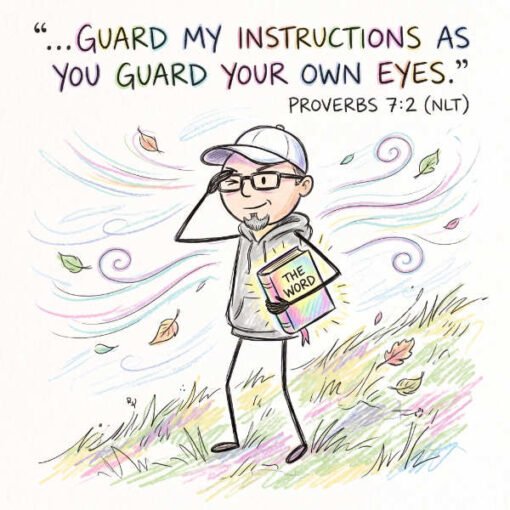
Guarding the internal life—the mind, desires, and intentions—is essential for sustaining progress on this journey. Proverbs 4:23 instructs the traveler above all else to guard their heart, because everything in life flows directly from it. External behaviors, speech, and relational patterns are outward manifestations of interior priorities. If the heart becomes poisoned by bitterness, lust, or greed, the feet inevitably stumble off course. Maintaining a clean conscience and a sincere heart preserves emotional, relational, and spiritual health.
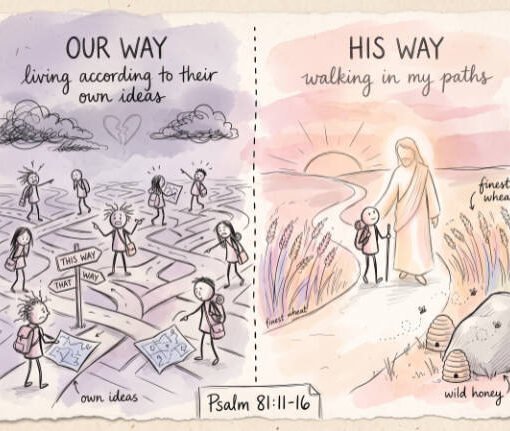
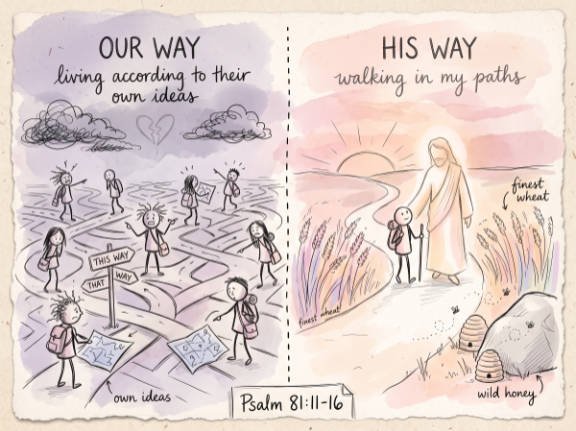
Proverbs repeatedly warns that human perception can be dangerously deceptive when detached from divine wisdom. Proverbs 14:12 cautions that there is a way that appears right to a person, but in the end leads only to death. This verse highlights the danger of rationalizing compromises, cutting moral corners, or relying exclusively on subjective feelings. Progressing on the path to life requires continuous self-examination against timeless moral standards, rather than assuming that personal intuition is always a safe guide.
The wider narrative of the Old Testament consistently reinforces this two-path motif, framing it as an intentional covenant choice. In Deuteronomy 30:19, Moses sets before Israel life and death, blessing and curse, urging the people to choose life so that they and their descendants might live. Similarly, the opening lines of Psalm 1 describe the blessed person who avoids the council of the wicked and instead delights constantly in the law of the Lord, flourishing like a tree planted beside streams of water. These passages demonstrate that the wisdom literature of Proverbs shares a unified theological core with the rest of Scripture: life is found in attentive obedience to God’s revealed instruction.
The prophetic literature expands this concept, showing that God’s word serves as an active navigational light through an often disorienting world. Psalm 119:105 identifies God’s word as a lamp to guide the feet and a light for the path. When moral clarity becomes clouded by cultural pressures or personal confusion, scriptural truth illuminates the immediate next step. In Jeremiah 6:16, the prophet urges people standing at the crossroads to look and ask for the ancient paths—the good way—and walk in it to discover rest for their souls.
In the New Testament, Jesus brings this wisdom tradition to its ultimate fulfillment, personally embodying the path described in the proverbs. In Matthew 7:13–14, Jesus uses identical journey imagery, contrasting the wide gate and broad road that leads to destruction with the narrow gate and hard road that leads to life. Following Jesus requires intentionality, focus, and self-denial, as walking the narrow path rarely aligns with following the majority crowd. The imagery clarifies that the path to life demands deliberate, conscious alignment rather than passive drifting.
Jesus goes beyond pointing toward the road; he explicitly identifies himself as the destination, the guide, and the road itself. In John 14:6, Jesus declares that he is the way, the truth, and the life, and in John 10:10, he states that his mission is to give life in full abundance. The wisdom sought by the sages of Proverbs becomes historically tangible in Christ, through whom forgiveness of sin, reconciliation with God, and true purpose are realized. Spiritual life is thus anchored in an ongoing relationship with Christ rather than a legalistic checklist of rules.
Ultimately, the path to life is a daily pilgrimage guided by the Holy Spirit and sustained by faith and practical obedience. In Galatians 5:16–25, Paul describes this walk as living by the Spirit, producing demonstrable fruit such as love, joy, peace, patience, kindness, goodness, faithfulness, gentleness, and self-control. Walking the path to life means making everyday decisions that honor God, value neighborly love, uphold honesty, and reflect Christ’s character, culminating in both temporal flourishing and eternal life.